People Analytics 💜 for data-driven HR
All your people data clearly in one place. Make decisions based on objective data, elegantly visualised in a wide range of predefined charts.
- 14 days free
- No credit card required


People analytics
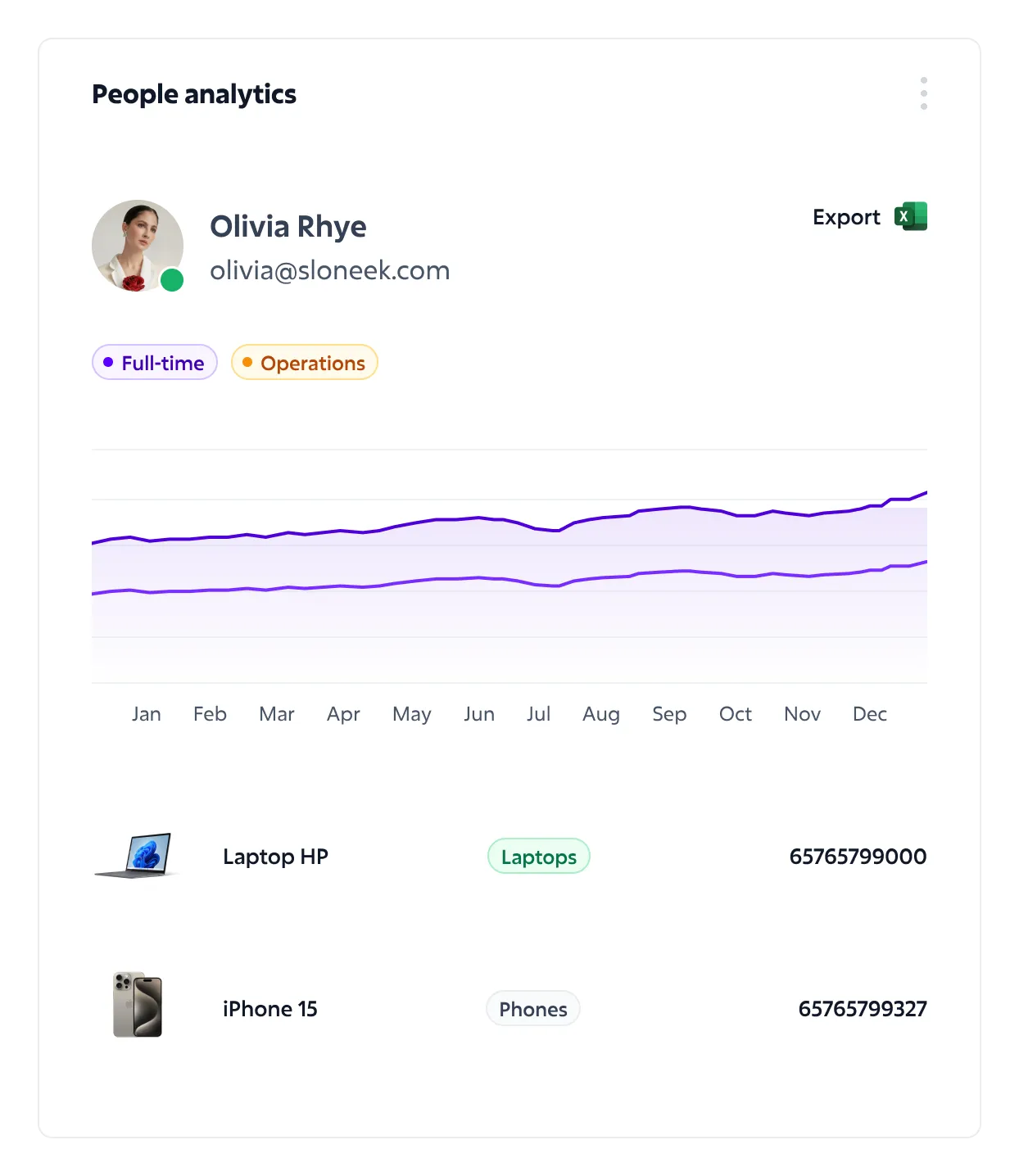
All your human resources data clearly in one place
Get an overview of what’s going on inside the organisation.
Effectively visualised data helps you make objective, data-driven decisions.
- Overview of people, documents, tools
- Accurate and up-to-date data for effective decisions
- Pre-prepared clear dashboards
- Export data to external spreadsheet tools
Hybrid teams
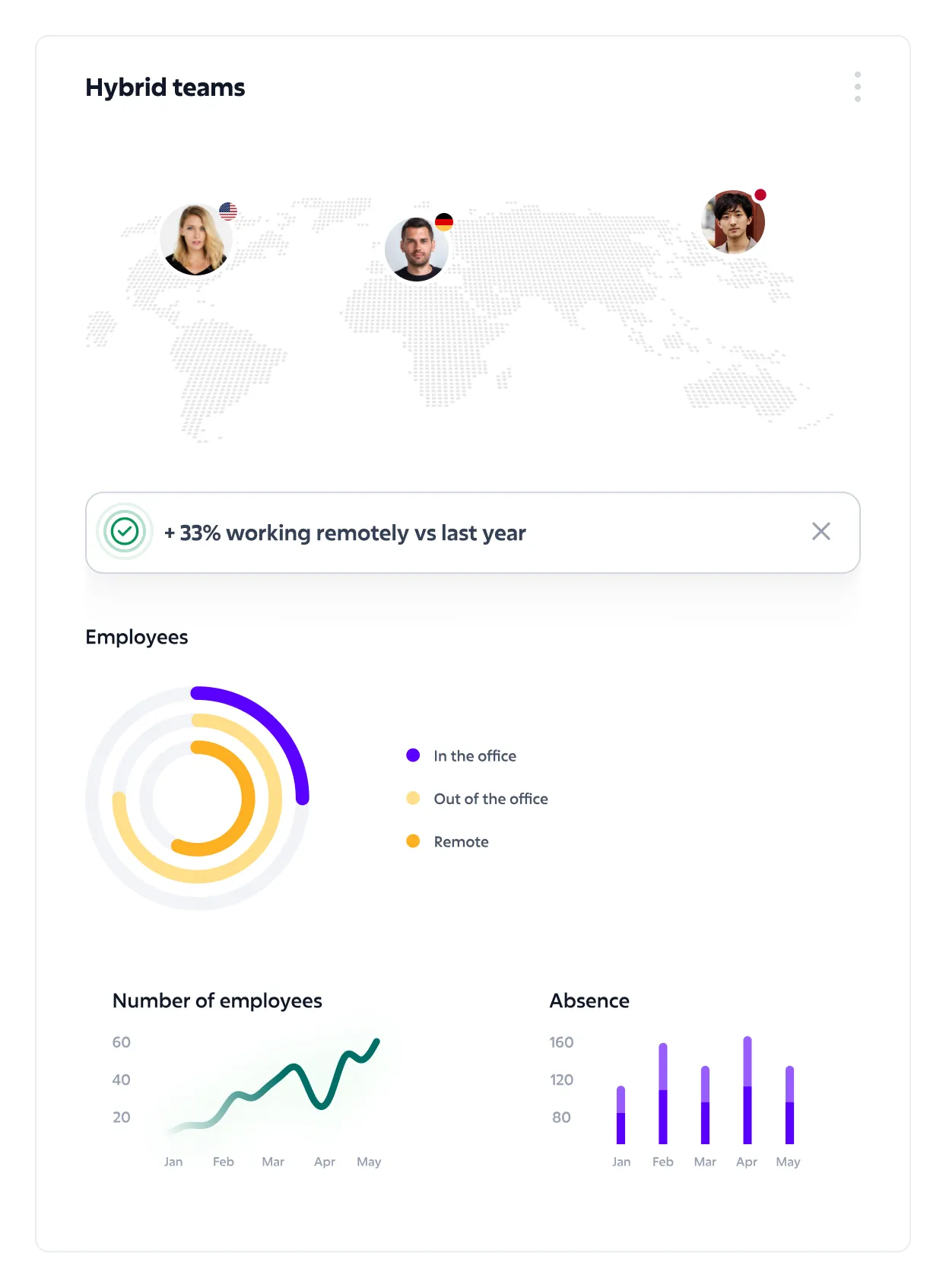
Effective management of international and hybrid teams
Employees and freelancers are now firmly under control wherever they work.
- Reports by type of job and location
- Measuring work efficiency
- Competence gap analysis
- Status of company documents and tools
Reporting
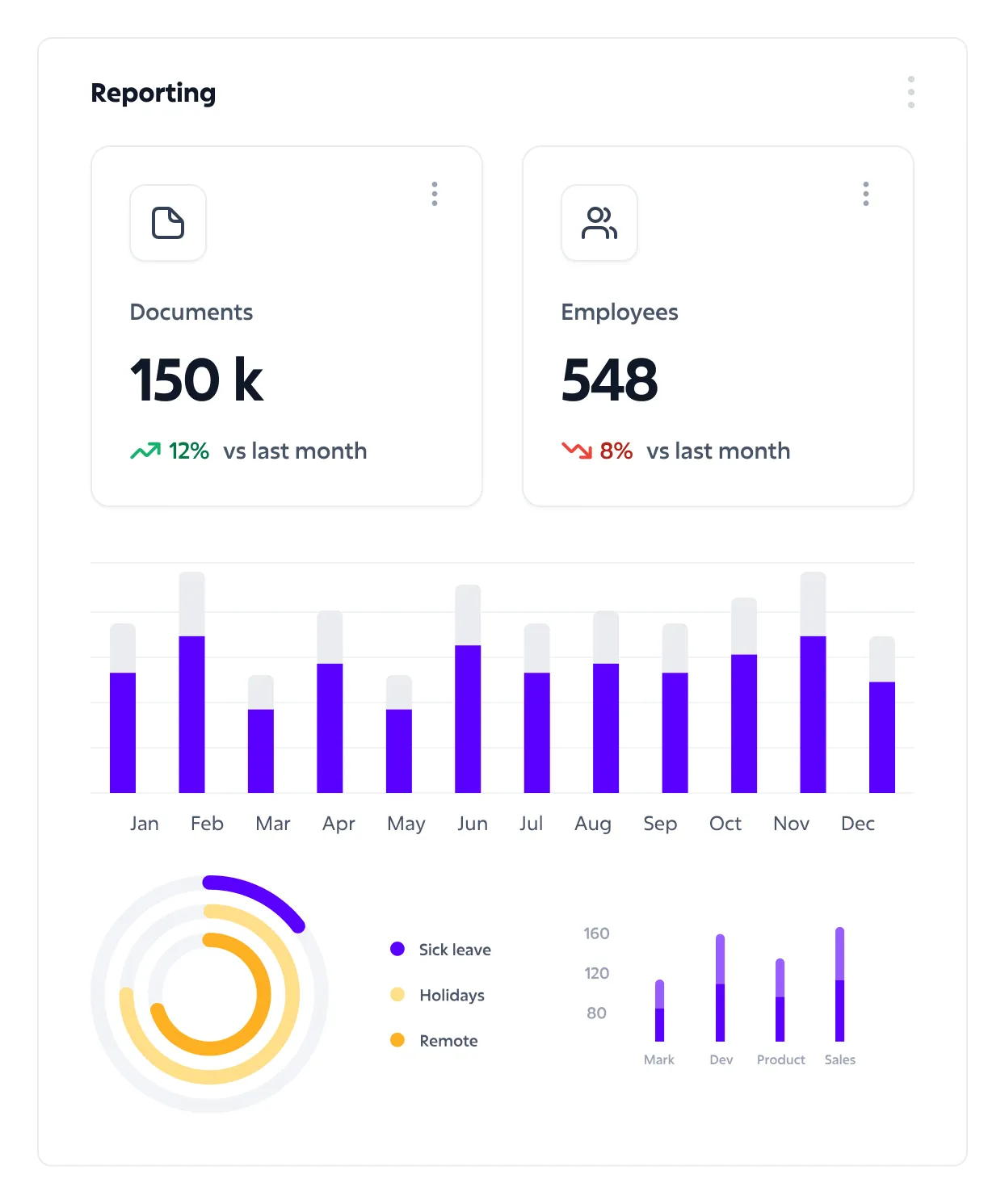
Compare and evaluate data across companies and teams
Comparison of metrics over a selected period to reveal risks and optimization of company processes.
- Evaluation of corporate and individual KPI’s
- Comparison of arbitrary data for different periods
- Reduce turnover by early detection of risks
- Proactive monitoring of company trends
HR Analytics: Achieving Clarity in Human Resources
The modern HR landscape is awash with data. The real question is whether HR is actually putting it to work. HR analytics (or People Analytics) helps bring order to the chaos, providing context to raw data and, most importantly, extracting insights that make sense for both the business and its people.
This is where true data-driven HR begins. Decision-making is no longer based on gut feelings, but on hard numbers. Guesswork is replaced by data analytics that reveal the reality of your organization exactly as it is.
The good news is that you don’t need an army of data scientists or endless Excel spreadsheets to achieve this. You simply need the right HR analytics tools to assemble the puzzle for you. By mastering human resources analytics, organizations can elevate standard hr functions into a strategic powerhouse. Effective hr data analysis transforms raw people data into actionable intelligence, proving exactly why hr analytics is essential for modern human resources management.
What is HR Analytics and Why is it Growing in Importance?
Simply put, HR analytics integrates data regarding employees, recruitment, turnover, skills, and performance into a single, coherent overview. With high-quality data, HR can establish metrics that help clarify what is happening within the company, identify where risks lie, and determine where to focus attention before a problem escalates.
This comprehensive approach supports effective human capital management by utilizing descriptive analytics to explain past events and diagnostic analytics to understand causes, eventually leading to prescriptive analytics that optimize the full employee life cycle through robust workforce analytics and data-driven decision-making.
The importance of HR analytics is surging primarily because Human Resources is playing an increasingly strategic role. Management demands answers in the language of numbers: How many people do we actually need? What is our turnover rate? Which critical skills are becoming scarce? HR reporting and analytics provide teams with data-backed arguments rather than just impressions, aligning HR more closely with core business objectives.
HR Analytics Software: Bringing Order to Your Data
Collecting data is one thing; effectively working with it is another. High-quality HR analytics software connects information regarding people, documentation, recruitment, and performance, displaying it all in clear, accessible charts and dashboards. An HR analytics dashboard offers a rapid overview without the need to dig through tedious tables, giving HR the confidence that they are working with real-time, accurate data.
Modern platforms often integrate with existing hr systems and your learning management system to populate a comprehensive visual dashboard. Solutions like HR Acuity or other hr management analytics software are often cited among the best tools for hr analytics because they allow you to configure the software to meet specific operational demands.
It is crucial to consider data security, often necessitating a secure single-tenant solution. Whether the pricing model is per user per month or flat-rate, the software should be a customizable solution designed to match your specific level of customization, ensuring you can access advanced features without unnecessary complexity.
The Practical Benefits of HR Analytics
The true power of HR analytics becomes apparent when HR has a clear grasp of the numbers and sets KPIs based on concrete data.
Typical HR KPIs include turnover rates, average time-to-hire, cost-per-hire, absenteeism, team capacity planning, and key skills coverage. Building on these metrics, advanced analysis allows leaders to track employee satisfaction and employee engagement to boost morale, while leveraging broader recruitment analytics to comprehensively improve talent acquisition.
It also helps in monitoring workforce diversity and closing the gender pay gap, ensuring equitable training and development while proving the return on investment of HR initiatives.
Predictive Analytics and the Future of People Analytics
The next step is predictive HR analytics, which looks to the future. Predictive analytics in HR can estimate "flight risk" (the likelihood of employee departures), future capacity requirements, or the evolution of key skills. The integration of artificial intelligence and generative AI is creating AI-fueled efficiencies that dynamically adjust workforce composition.
This allows companies to align their workforce strategy with the broader organizational strategy, ensuring robust succession planning despite a volatile labor market. Furthermore, advanced modeling helps prevent employee burnout while identifying gaps in workforce AI skills, which is critical for long-term workforce planning.
The future of HR analytics belongs to companies that work with data systematically and intelligently. The HR analytics maturity model clearly shows that organizations with top-tier analytics have more stable teams, plan better, and react faster to change.
Thanks to People Analytics, HR finally speaks a language that the entire business understands.
Staying Informed and Compliant
To maintain this strategic advantage, professionals should follow the latest HR news and participate in events like an HR Symposium or review academic HR Studies. Keeping up with these trends ensures that training programs and employee training initiatives remain relevant in a fast-paced business day.
Additionally, maintaining accurate employee records and generating detailed HR reports helps streamline the recruitment process. Monitoring metrics like training completion ensures compliance and drives continuous improvement across the organization.


With Sloneek HR analytics you don’t have to be a data specialist!
What are you struggling with?
- Overview of people, documents and tools
- Unclear data for objective decisions
- Complex and unclear data presentation
How are you gonna deal with Sloneek?
- Collection and clear interpretation of all data
- Accurate and up-to-date data for effective decisions
- Pre-prepared clear visualizations
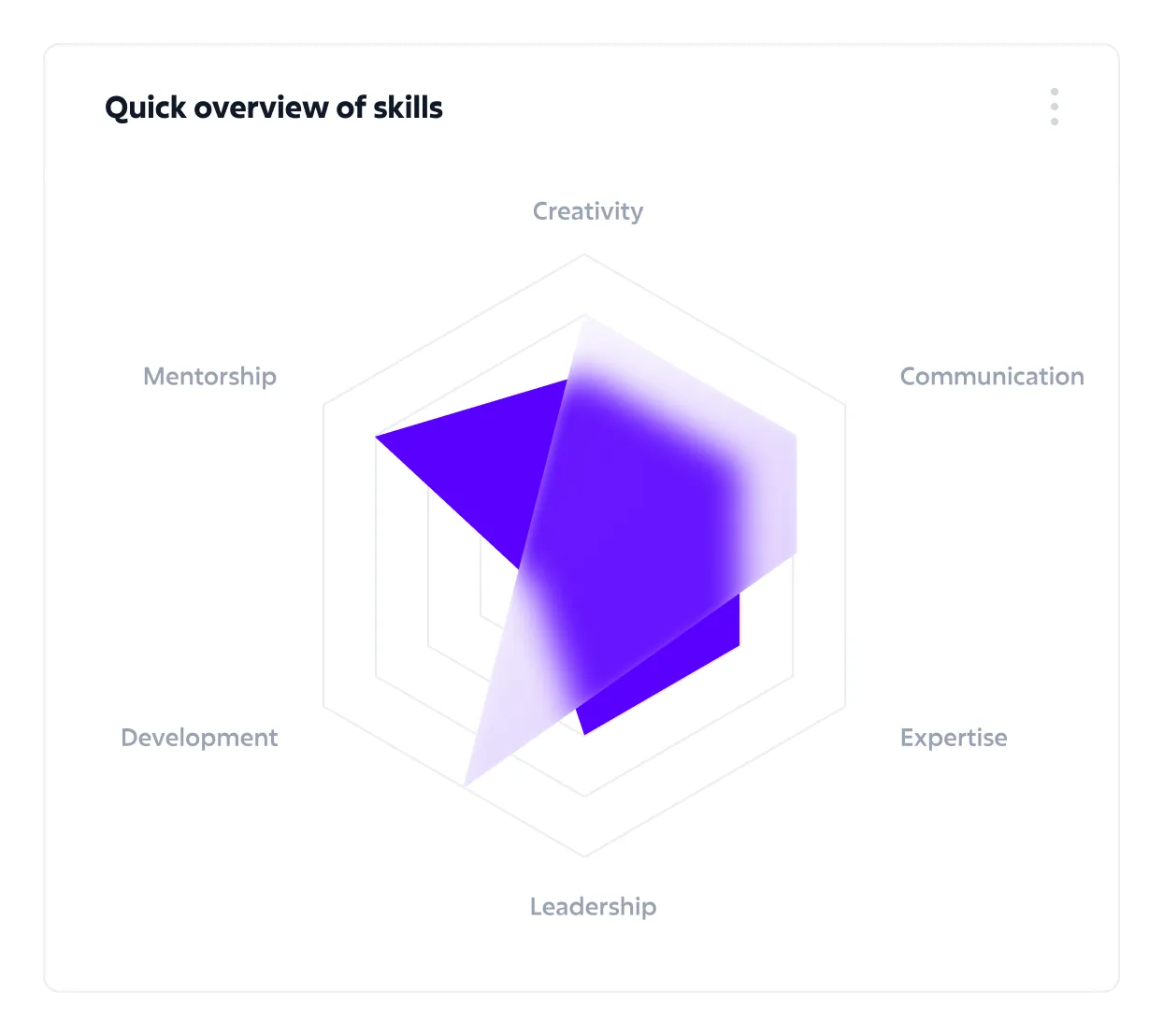
Skills
Quick overview of skills
An overview of the status, distribution and development of skills in your organisation, allowing easy tracking and comparison of skills.
- Missing skills in the company
- Current overview of skills in the company
- Distribution of skills within skill sets
- The 10 least covered skills in the company
- Skill level of an individual vs. average
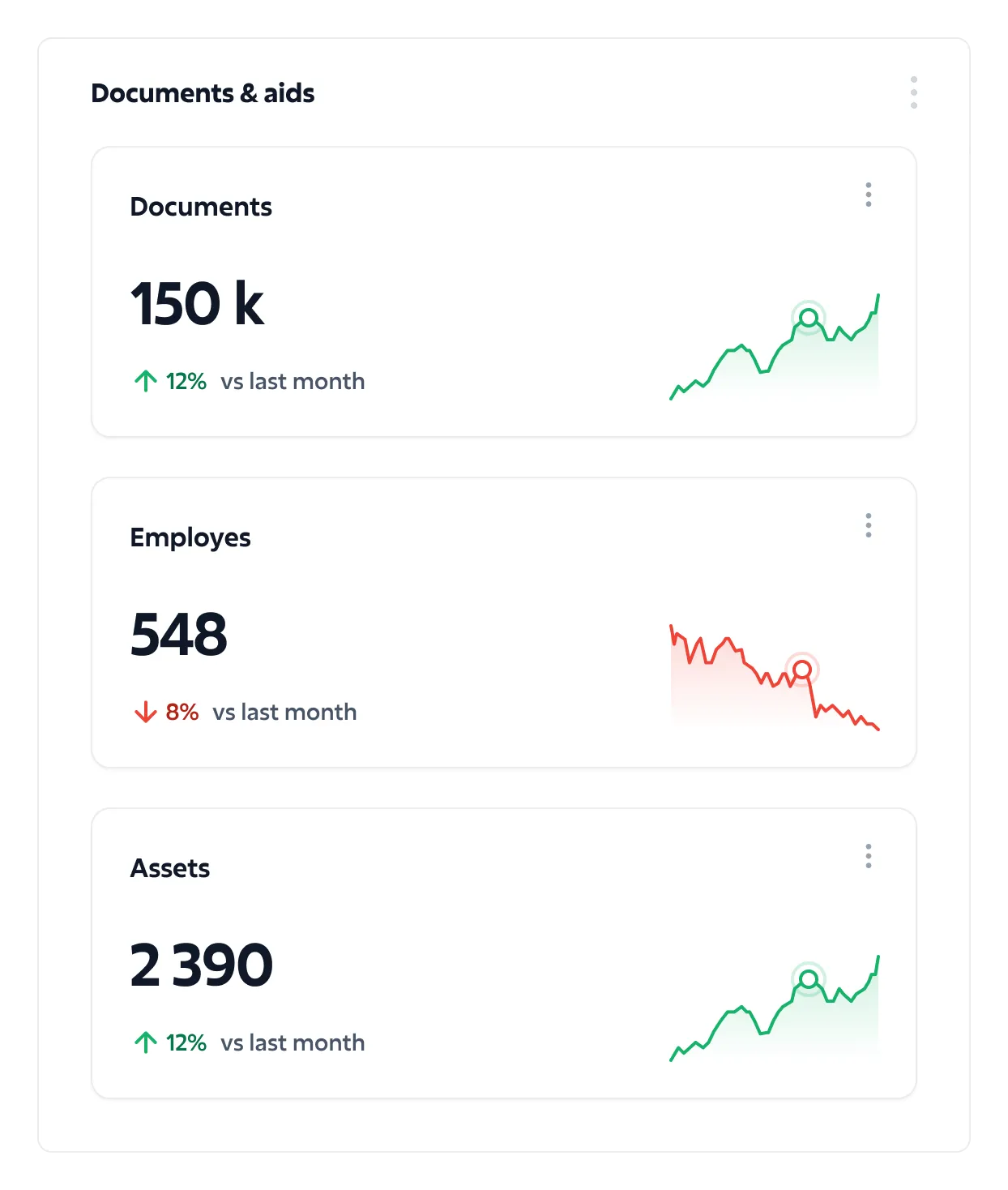
Documents & aids
Documents and tools under control
Get an overview of the number and types of tools and documents in the company, their current status and the attention needed.
- Number of all company documents and tools
- Number of aids needing attention
- Distribution of documents/tools by type and status
- Distribution of documents and tools by tags
- Average number of aids per employee
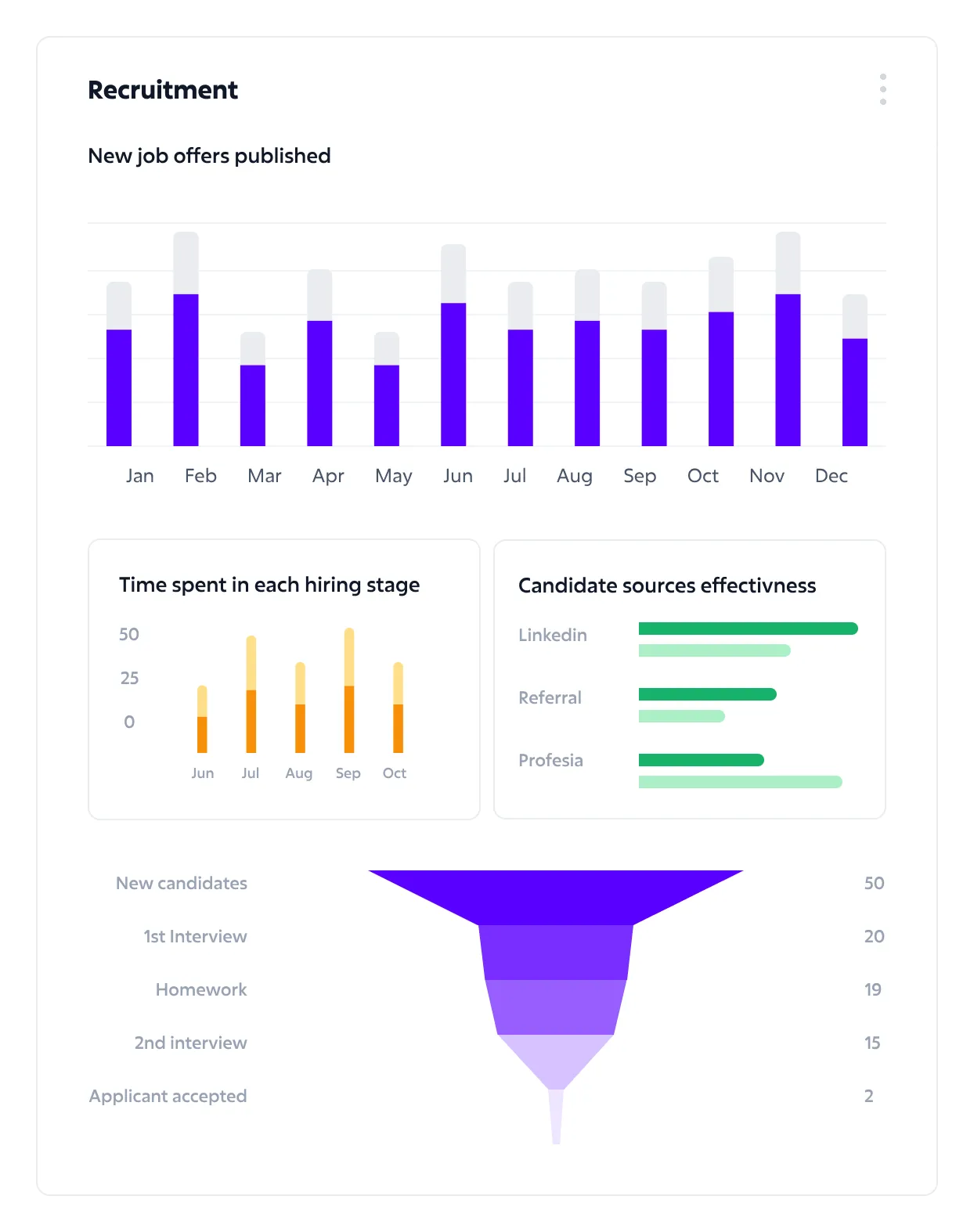
Recruitment
Measuring recruitment effectiveness and overview candidates
Key indicators for recruitment and onboarding.
Measure and optimize processes to fill positions.
- Number of published positions for the period
- Recruitment funnel conversion rates
- Sourcing channels effectiveness per position
- Average time to fill a job
- Time spent in each hiring stage per position
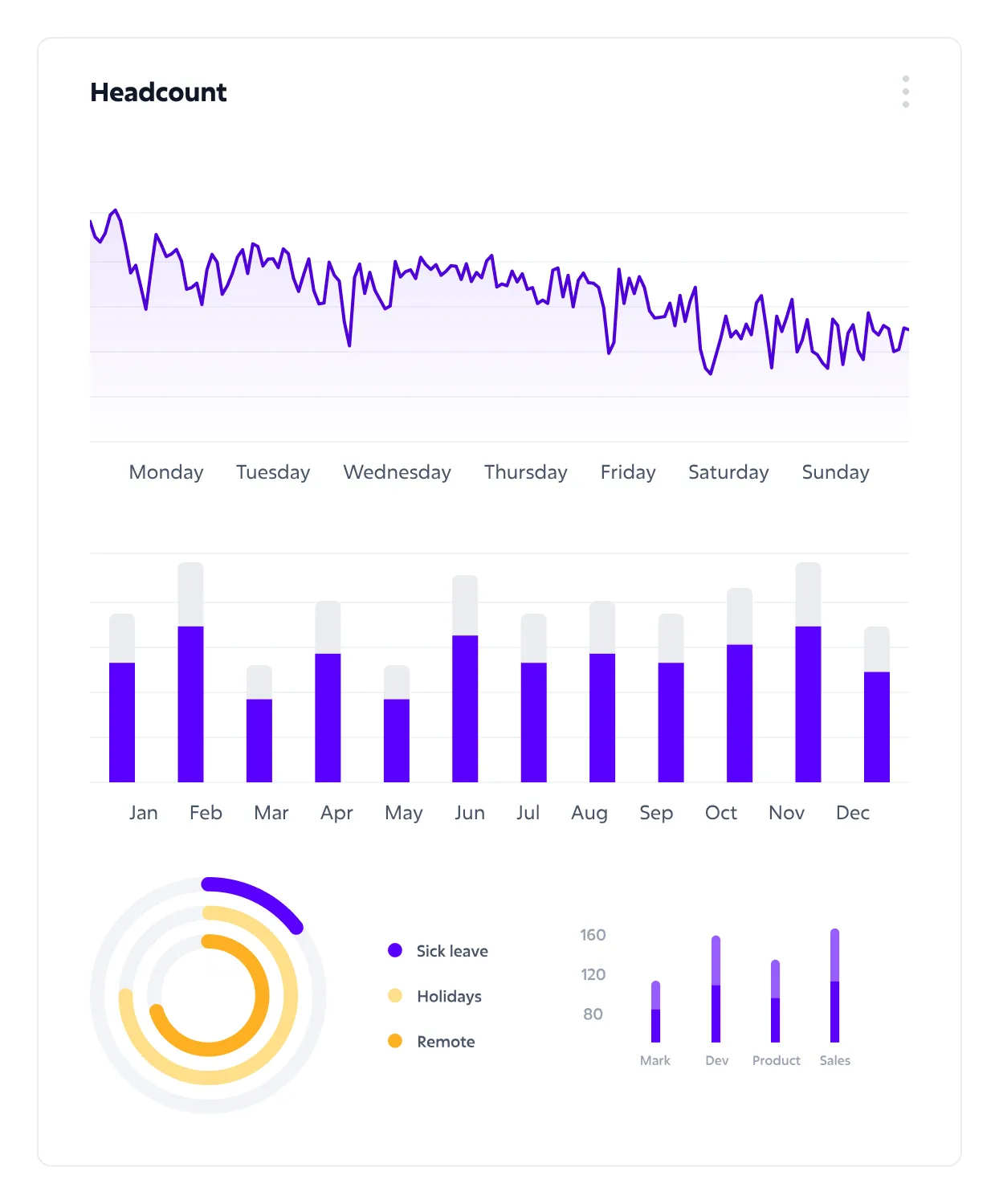
Headcount
Comprehensive overview of people and turnover in your organisation
How many people do you employ, where do they work, what are their hours and what is the turnover rate? All clearly visualized in graphs.
- Total number of employees working in the organisation
- Number of people divided by type of employment
- Number of people divided by location, branches
- Detailed overview of turnover
- Ratio of terminations by reason
Can we help you?
Our experts will answer questions, show you Sloneek , and help modernize your HR.
- Superior onboarding
- Introduction of all functionalities
- Presentation and offer tailored to your HR
- Answer any questions


Leave us your contact details, we will get back to you.
Frequently Asked Questions (FAQ) about Sloneek People Analytics
No, you don’t. The Core HR system includes Sloneek People Analytics, which gives you an overview of your company’s key performance indicators and allows you to easily create and share reports.
With Sloneek s carefully selected pre-made templates, you have all the metrics you need for a perfect overview of your entire company.
Sloneek People Analytics comes with pre-built hr analytics dashboards that offer metrics such as growth, retention, headcount, career development, and absenteeism, among others. The software allows for both descriptive and predictive hr analytics, thereby covering various types of hr analytics.
Sloneek People Analytics is an integral part of our Core HR system, offering powerful HR analytics tools and software designed to provide a comprehensive overview of your company’s key performance indicators (KPIs) in HR. It underscores the importance of HR analytics in streamlining HR operations, including HR data analytics, HR metrics, and more.
With Sloneek, you can easily generate reports using carefully crafted templates. These templates are customized to provide deep insights into various aspects of your organization, including HR analytics, workforce analytics, and predictive HR analytics, among others.
Sloneek People Analytics offers pre-built HR analytics tools that include a wide range of KPIs. These include indicators such as growth, retention, headcount, career development, absenteeism and many others. The software supports descriptive and predictive HR analysis, providing a comprehensive approach to HR data analysis.
You do not need to purchase Sloneek People Analytics as a standalone module. It integrates seamlessly into our Core HR system, giving you comprehensive HR analytics capabilities at no additional cost. This integrated approach enhances your ability to effectively use HR data analytics.
Of course! Sloneek People Analytics offers key metrics for recruitment and induction training to help you measure and optimise the effectiveness of your recruitment processes. You can track metrics such as the number of positions posted, the progress of applicants through various stages, the time it takes to fill positions, and the average time to fill a position, ensuring an effective recruitment strategy.
Sloneek People Analytics provides a quick overview of the skills in your organisation. It offers insights into the status, distribution and evolution of skills, allowing easy monitoring and comparison of skill sets. You can identify skills gaps, assess the skill levels of individuals and understand the distribution of skills, facilitating informed decisions in workforce planning.
Yes, you can! Sloneek People Analytics gives you an overview of the number and types of tools and documents in your company, their current status and areas of importance. You can analyse data such as the number of company documents and tools, their distribution by type and status, and the average number of tools per employee, ensuring efficient document and tool management.
Sloneek People Analytics enables efficient management of international and hybrid teams by providing reports broken down by job type and location. It allows you to measure work efficiency, perform competency analysis and monitor the status of company documents and tools in multiple locations, improving oversight of remote and international teams.
With Sloneek People Analytics, you can get a comprehensive overview of the number of employees and turnover in your organization. This includes data on total number of employees, types of employment, locations, branches and detailed turnover statistics. You can also analyze the reasons for termination, allowing you to proactively address retention strategies.